
Further information about EEE – precious metals, hazardous materials
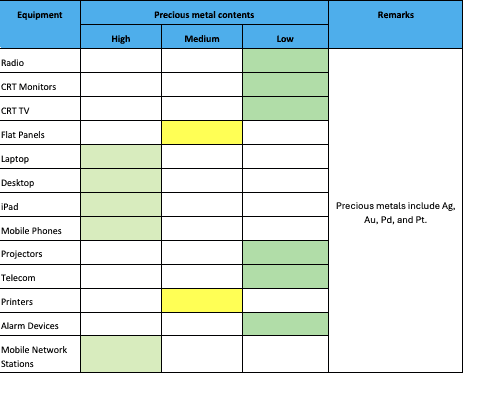
The classification of equipment based on precious metals content involves categorizing various types of electronic devices according to the presence and concentration of valuable metals such as gold, silver, platinum and palladium. This classification helps assess the potential economic value of e-waste and guides recycling and recovery processes. Equipment is typically grouped into categories such as high, medium or low precious metals content, depending on the quantity and type of metals they contain.
Devices like smartphones and laptops are usually classified as high-value equipment due to their significant precious metals content while other types of equipment, such as household appliances, may fall into lower categories. Understanding the precious metals content of different equipment is essential for efficient e-waste management, as it allows for targeted extraction methods and maximizes resource recovery.
Table 10: Classification of Equipment Regarding Precious Metals Content
The hazardous materials that exist in WEEE fractions are classified as follows:
Heavy metals such as lead, mercury, cadmium, tin, antimony, and americium (radioactive element used in smoke detectors) are hazardous metals despite of their value, and they should be handled with due care.
Brominated Fire Retardants are materials that exist with plastic inside some e-waste fractions. They are classified as POPs by the Stockholm Convention [11]. Like all POPs, these chemicals possess toxic properties, resist degradation, and bio-accumulate. They are transported through air, water, and migratory species, across international boundaries and deposited far from their place of release, where they accumulate in terrestrial and aquatic ecosystems.
UPOPs (mainly polychlorinated dibenzo-p-dioxin and –furan) are emitted during the burning of plastic e.g. copper cables.
Liquid hazardous substances used in processing the fractions such as sulphuric acid, nitric acid, and hydrochloric acid.
Sources:
[11] Revised draft guidance for the inventory of poly-brominated diphenyl ethers under the Stockholm Convention, March 2015
